PARKER’S FORD TO TRAPPE
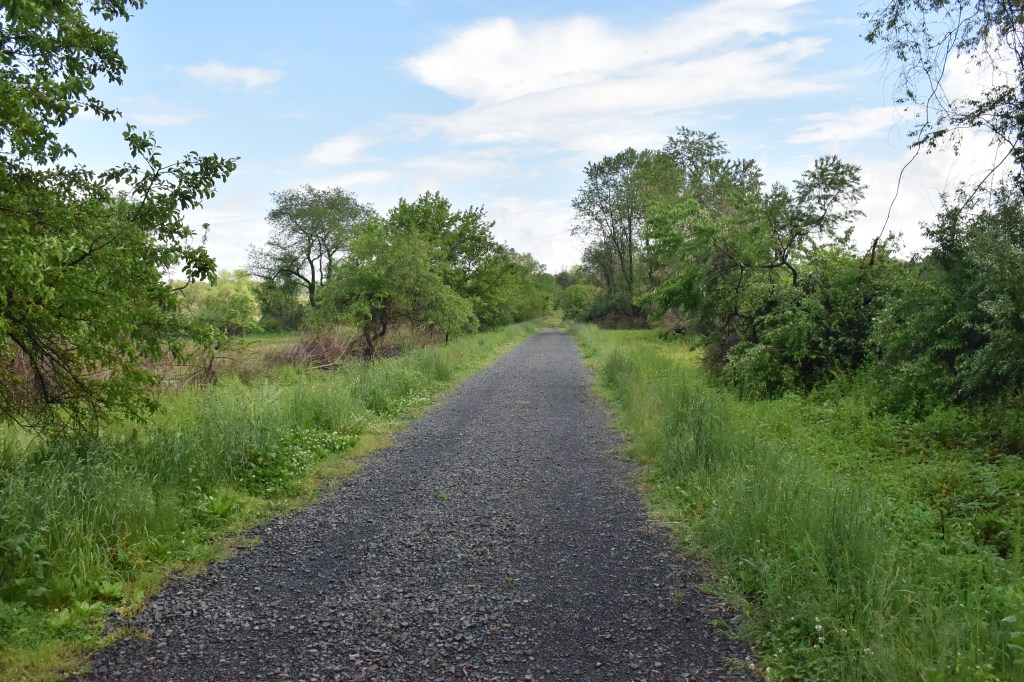
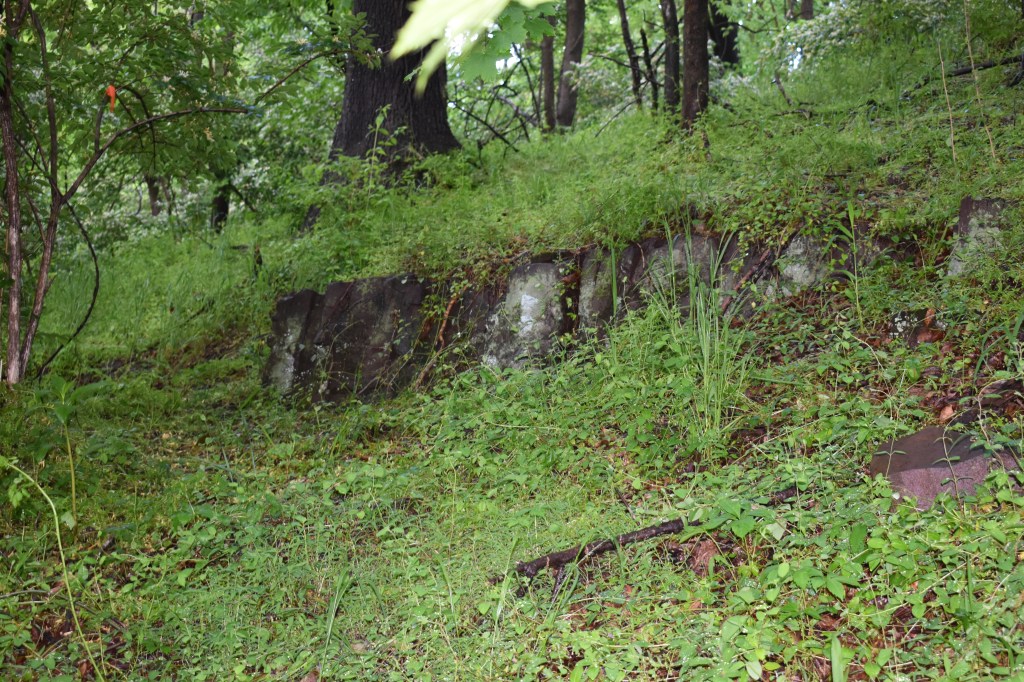
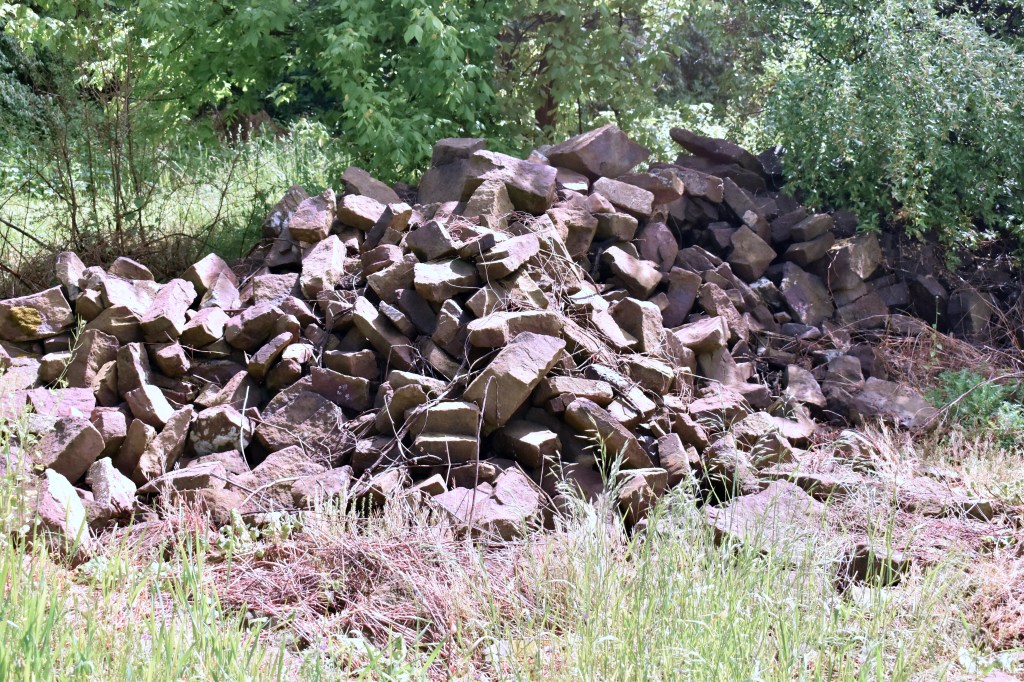
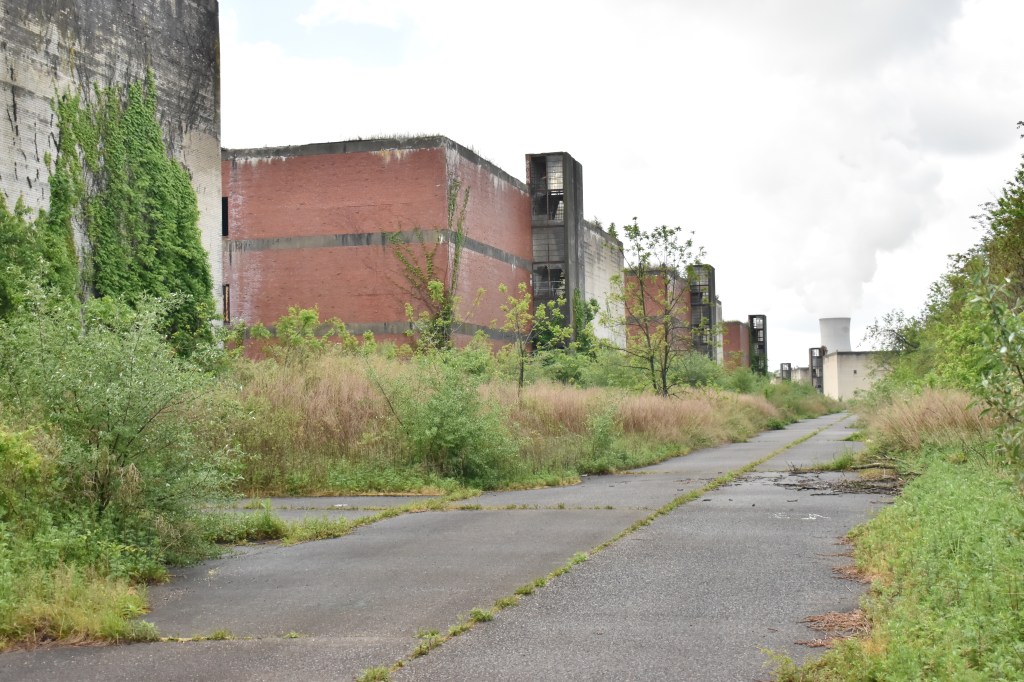
The east bank of Parker’s Ford is located in Linfield, Limerick Township and the Linfield-Trappe Road led from here to the Colonial Great Road (present day Ridge Pike) just west of Trappe. At the time the road was known as the Schuylkill Road. This was the intended route for the army to move down towards the lower fords on the Schuylkill. The ground on the Linfield rises up thirty feet or so from the banks of the river and the road proceeds eastward. The area now is the old, abandoned Linfield Industrial Park, home of the Kinsey Distillery (see photo for explanation). There was at least one home and outbuildings there at the time of the Revolution, but they are long gone and there’s no trace of the road from the ford to the existing Linfield-Trappe Road.
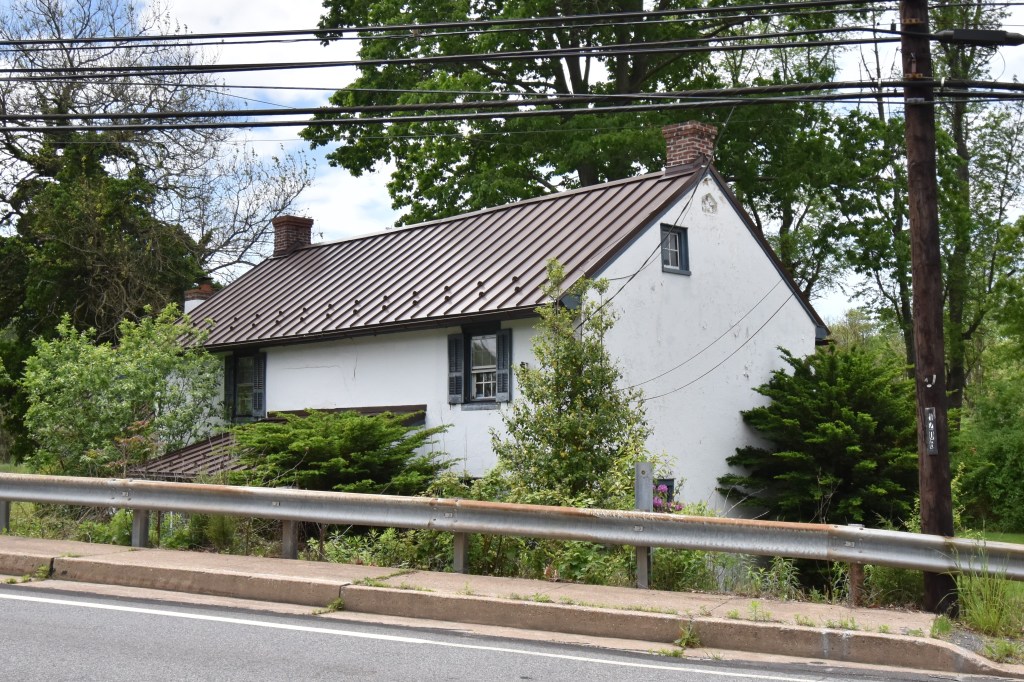
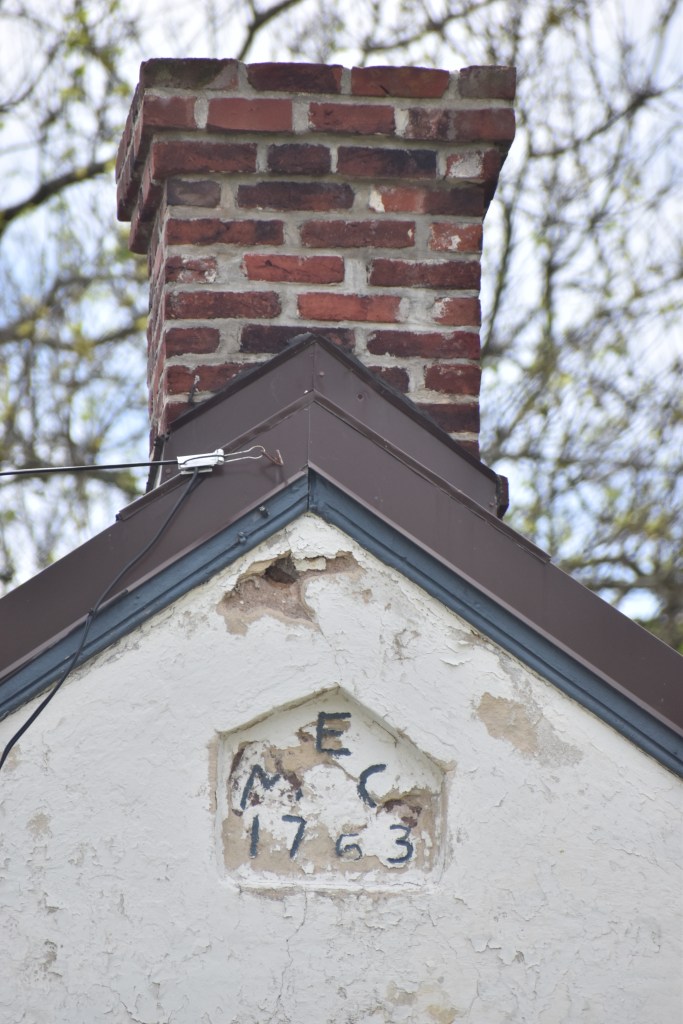
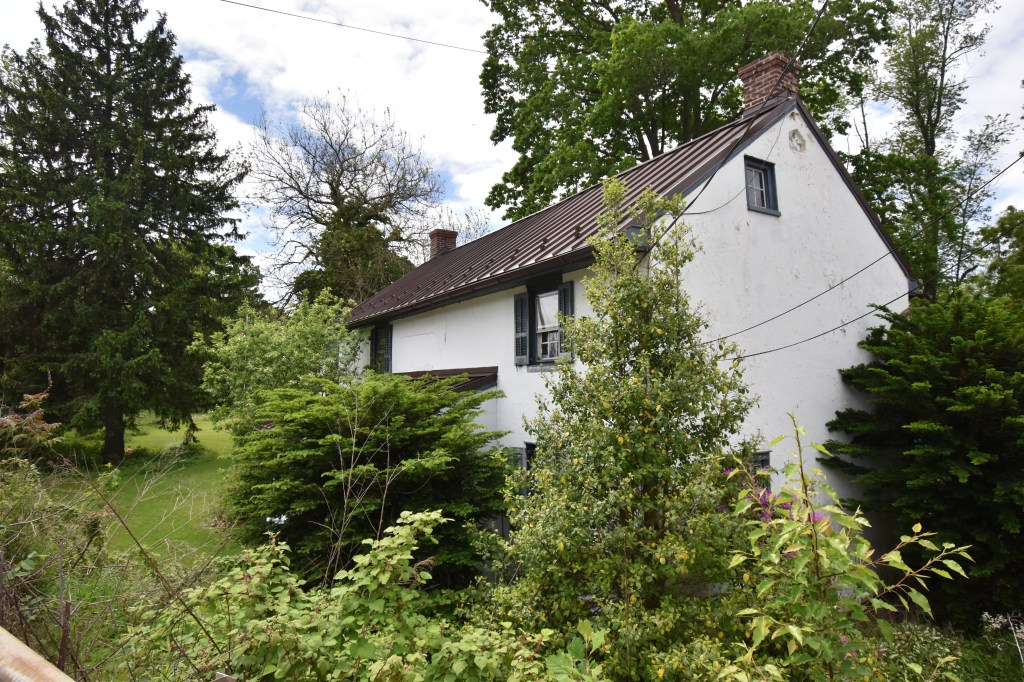
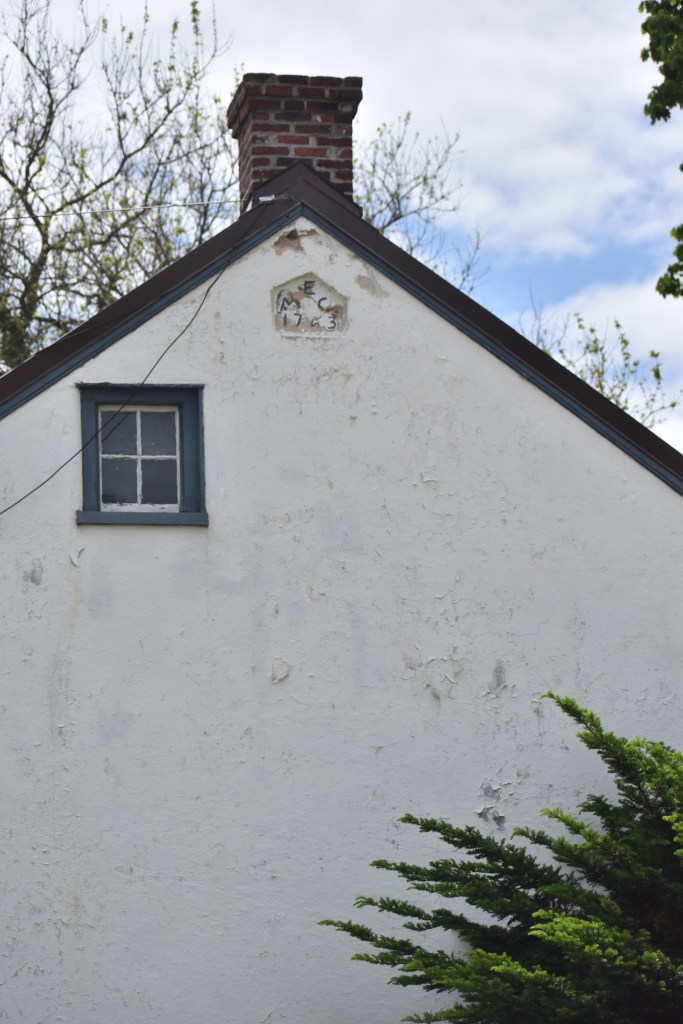
Situated on the road to Trappe just past the industrial park is the Mordechai Evans House, built in 1763 and one of the first homes in the area. It’s believed that Washington stopped here after fording the river and wrote a letter to Congress while drying his clothes at the hearth of this house.

The letter from George Washington to John Hancock, 19 September 1777, is as follows:
“ To John Hancock, Parkers Ford—on Schuylkill [Pa.] Septr 19: 1777 ¾ after 5. P.M.SirI was honoured this Morning with your Favors of the 17th & 18th, with their Inclosures. I am much obliged to Congress for the late instance of their Confidence, expressed in their Resolution of the 17th, and shall be happy if my conduct in discharging the Objects, they had in view should be such as to meet their approbation.I am now repassing the Schuylkill at Parkers Ford, with the Main body of the Army, which I hope will be over in an hour or Two though the water is deep & rapid. Genl Wayne with the Division under his command is in the Rear of the Enemy, and will be joined to Morrow or next day, I expect, by Genl Smallwood and Colo. Gist with their Corps. As soon as the Troops have crossed the River, I shall march them as expeditiously as possible towards Fat Land—Sweds & the Other Fords, where it is most probable the Enemy will attempt to pass.” (“From George Washington to John Hancock, 19 September 1777,” Founders Online, National Archives, https://founders.archives.gov/documents/Washington/03-11-02-0268. [Original source: The Papers of George Washington, Revolutionary War Series, vol. 11, 19 August 1777 – 25 October 1777, ed. Philander D. Chase and Edward G. Lengel. Charlottesville: University Press of Virginia, 2001, pp. 268–270.])
It appears that he wrote this letter at 5:45 PM on the 19th after crossing the river while he waited for the rest of the army to cross. Therefore, it’s likely he didn’t stay at the Parker Tavern the night of the 19th but proceeded with the army on a night march to the lower fords.The letter was simply an updated report to Congress on Washington’s current situation. You can read the entire letter here: https://founders.archives.gov/documents/Washington/03-11-02-0268
Regarding the crossing for the army and subsequent march, “Gen. Peter Muhlenberg’s father, Henry Melchior Muhlenberg (1711–1787), a renowned Lutheran clergyman who lived at Trappe, wrote in his journal entry for this date that he “received news in the afternoon that the British troops had marched across toward Providence on the other side of and farther down the Schulkiel. Their camp could be seen, I was told, through a fieldglass. The American troops then marched through the Schulkiel, four miles from us, and came out on the road to Philadelphia at Augustus Church [the Great Road I mentioned above]. They had to wade through the river up to their chests. His Excellency General W[ashington] was himself with the troops who marched past here to the Perkiome. The passage of the troops lasted through the night and we had all kinds of visitors, officers, etc. To get wet up to one’s chest and then to march in the cold, foggy night while enduring hunger and thirst, etc. is hard for the poor men. It takes courage, health, etc. But instead of prayers, what one hears from many of them is the horrible national vice: cursing” (Tappert and Doberstein, Muhlenberg Journals, 3:77–78).”
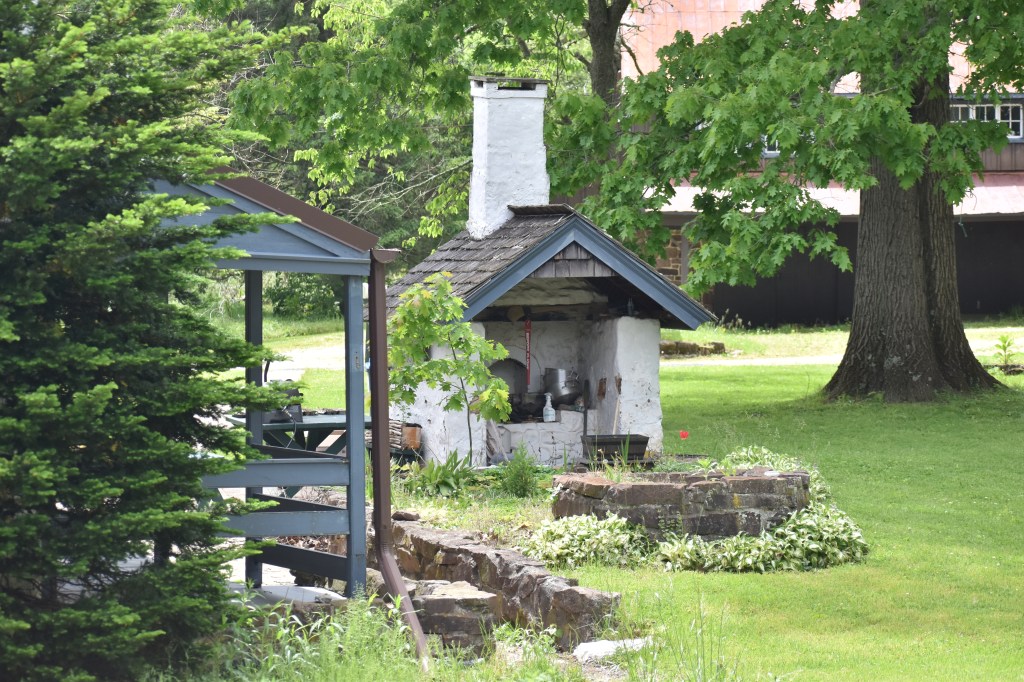
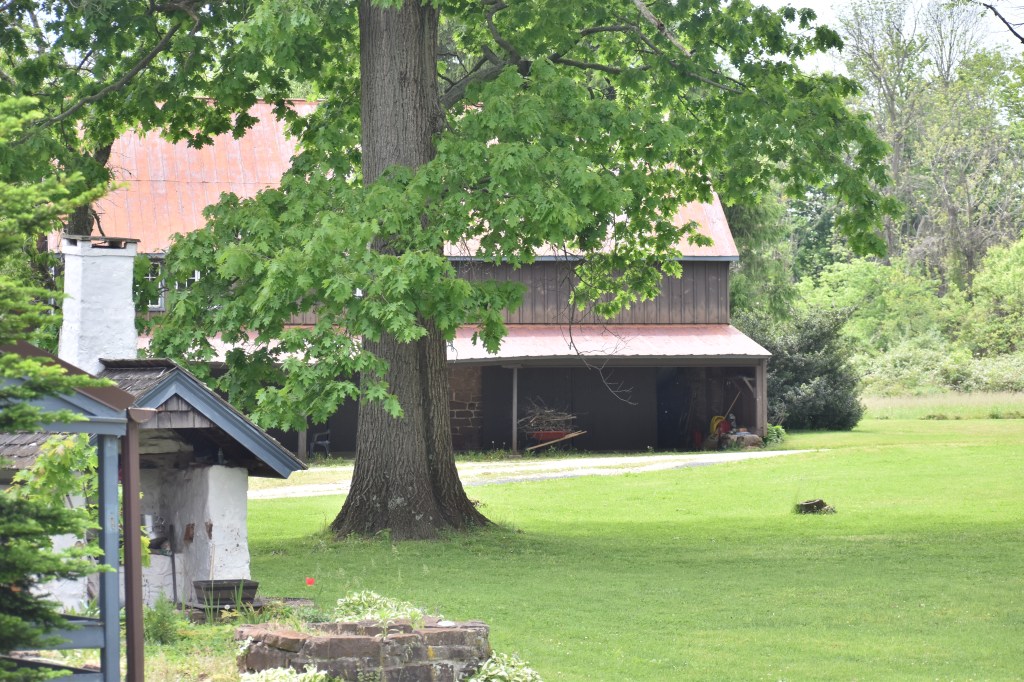
Pictured is the Evans House where Washington stopped. The original home was built around 1720, one half mile from the ford and was a simple log cabin. Additions and outbuildings were added with the main addition completed in 1763, and this was the condition at the time of Washington’s visit. South of the house, towards the river was another Evans home which was there during the Revolution. In front of the house was a small outbuilding that served as a post office, and mail was dispatched by boat back and forth with Philadelphia. Muriel Lichtenwalner maintains that Washington’s letter was dispatched from here and made its way to Hancock and Congress. (“Limerick Township: A Journey Through Time 1699 – 1987” by Muriel E. Lichtenwalner, Limerick Township Historical Society, Limerick, PA 1987)
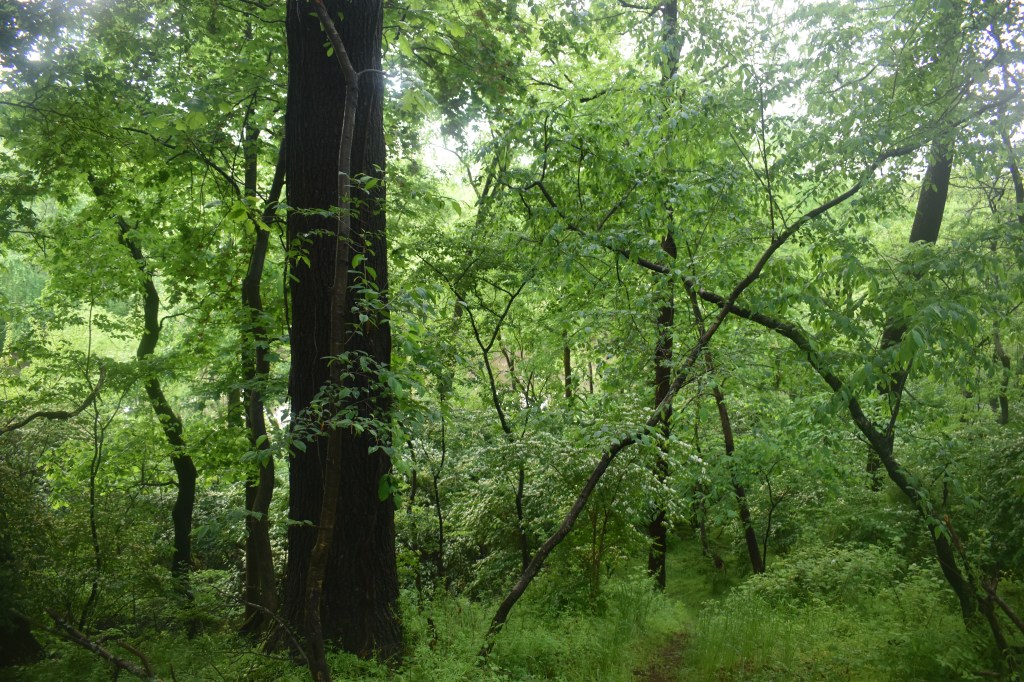
There were several other buildings and mills in this area but they no longer exist and the area is overgrown, except for sections of the State Game Lands that are farmed. One can picture a quiet country road with the occasionally traveler passing by foot, on horseback or wagon, but “The lane to the river with its double row of trees can no longer be distinguished, for bushes and weeds have completely overgrown the area.” Muriel E. Lichtenwalner, “Limerick Township: A Journey…)Also see notes included with the photos.
 Solutions To History