Brigadier General Francis Nash was born in Virginia around 1742 and moved to Hillsborough, North Carolina, at the age of 21. There, he became a successful lawyer and businessman. Through his involvement in the local militia and provincial politics, Francis Nash supported the patriot cause and was eventually appointed Lieutenant Colonel in the 1st North Carolina Regiment, which was later mustered into the Continental Army. Early in 1777, he was promoted to Brigadier General and given command of the North Carolina Brigade. The North Carolina Brigade joined Washington’s army and fought at the Battle of Brandywine.
At the Battle of Germantown, the North Carolina Brigade was part of Major General Lord Sterling’s command and was to be held in reserve. Early in the battle, Washington ordered Stirling forward, and the North Carolinians followed behind Wayne’s brigade, which was advancing past the Chew house, pushing back the British. Nash’s brigade remained north of Cliveden, continuing to attack the British holdouts defending the stone mansion. As the forward units met strong resistance, they fell back past Cliveden under the British counterattack. As Sullivan’s and Wayne’s divisions fell back up Germantown Pike, the North Carolina Brigade held the line, allowing for as orderly a retreat as possible. General Nash was wounded here during one of the last actions of the battle.
In “Recollections and Private Memoirs of Washington by his adopted son, George Washington Parke Custis”, Custis wrote the following account of the wounding of General Nash and the several days that followed. One should assume that much of this dramatic account was embellished; however, if nothing, it provides a fascinating picture of the incident. It is possible that some of this account was provided by Dr. Craik, Washington’s physician, directly to Custis in the years following Washington’s death. Considering Nash’s condition, the degree of eloquence in his last words is remarkable.
“While gallantly leading the North Carolina brigade, that formed part of the reserve, into action, General Nash was mortally wounded. A round-shot from the British artillery striking a sign-post in Germantown, glanced therefrom, and, passing through his horse, shattered the general’s thigh on the opposite side. The fall of the animal hurled its unfortunate rider with considerable force to the ground. With surpassing courage and presence of mind, General Nash, covering his would with both of his hands, gayly called to his men, “Never mind me, I have had a devil of a tumble; rush on, my boys, rush on the enemy, I’ll be after you presently.” Human nature could do no more. Faint from loss of blood, and the intense agony of his wound, the sufferer was borne to a house hard bye, and attended to by Doctor Craik, by special order of the commander in chief. The doctor gave his patient but feeble hopes or recovery, even with the chances of amputation, when Nash observed, “It may be considered unmanly to complain, but my agony is too great for human nature to bear. I am aware that my days, perhaps hours, are numbered, but I do not repine at my fate. I have fallen on the field of honor while leading my brave Carolinians to the assault of the enemy. I have a last request to make of his excellency the commander-in-chief, that he will permit you, my dear doctor, to remain with me, to protect me while I live, and my remains from insult. Dr. Craik assured the general that he had nothing to fear from the enemy; it was impossible that they would harm him while living, or offer an insult to his remains; that Lord Cornwallis was by this time in the field, and that under his auspices, a wounded officer would be treated with humanity and respect. The dying patriot and hero then uttered these memorable words: “I have no favors to expect from the enemy. I have been consistent in my principles and conduct since the commencement of troubles. From the very first dawn of the Revolution I have ever been on the side of liberty and my country.”
He lingered in extreme torture between two and three days, and he died, admired by his enemies – admired and lamented by his companion in arms.”
Michael Harris in “Germantown: A Military History of the Battle for Philadelphia, October 4, 1777” gives a good account of Nash’s wounding on pages 366 & 367. At the same time General Nash was wounded, his aide-de-camp, Major James Witherspoon was hit in the face by the same cannonball and died instantly. He is buried at Saint Michael’s Evangelical Lutheran Churchyard in Mount Airy, 3/10ths of a mile from Cliveden.
Another fascinating account of General Nash’s wounding is provided in “Francis Nash, Soldier and Patriot” by Linell Chenault Rogers, published in the Tennessee Historical Magazine, Series II, Vol. 3, No. 4 (January, 1937), pp. 269-279, Tennessee Historical Society:
“Here General Nash fell, a cannon ball shattered his leg near the thigh as he sat on his horse. Soldiers of his brigade bore him on a litter from the field. Young Major William Polk of the brigade was wounded in the mouth at the same time, a bullet shattering his jaw-bone and lodging near the ear. As the two officers and friends were being taken off the field, an affecting scene occurred. As related by Polk to a friend in 1826: ‘The last time I ever saw General Nash was on the battlefield of Germantown. He was being borne from the field on a litter. I had just been shot in the mouth and could not speak. I motioned to the bearers of the litter to stop. They did so and I approached to offer my hand to Nash. He was blind from pain and almost syncope from loss of blood, but when he was told that William Polk was standing near him, so wounded that he could not speak, Nash held out his hand and said: Goodbye, Polk. I am mortally wounded.’ “
Rogers also quotes John F. Watson, Annals of Philadelphia, regarding Nash’s wounds: “The bleeding was so profuse that two feather beds were saturated with blood”, John F. Watson, Annals of Philadelphia.
Nash was evacuated from the battlefield on a litter and moved with the retreating army up Germantown Pike, then onto Skippack Pike towards the Northwest. Approximately twelve miles from Germantown, the wounded Nash briefly stopped at Porter’s Tavern, also known as the Waggon Inn, at the intersection of Skippack Pike and present-day Route 202. From there, he was moved approximately six miles further up Skippack Pike to the DeHaven house at the intersection of Skippack Pike and Forty Foot Road. The total distance from the battlefield was nearly twenty miles, the approximate distance a wagon could travel in one day. The DeHaven house is also known as the Indenhofen Farmstead, which the Skippack Historical Society owns. De Haven is an anglicized version of the Indenhofen family name, and the home was built in 1725. At the time of the Revolution, the house was owned by Peter Keiter, grandson of Gerhard IndenHofen (De Haven). From the De Haven house, Nash was moved to the home of Adam Gotwals, located two miles up Forty Foot Road from Skippack Pike. It’s possible that Nash was not evacuated to the several field hospitals being set up after the battle to eventually be evacuated to the larger, general hospitals in Reading, Bethlehem, and Lancaster, and remained with the main army that was gathering for an encampment in the general area, due to the severity of his wounds and the expectation that he would eventually perish.
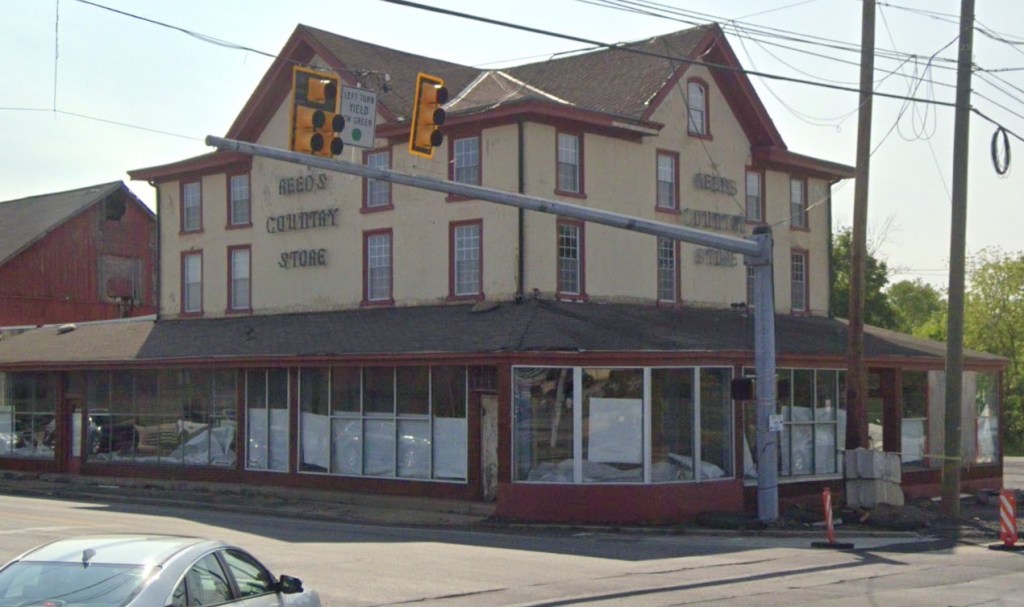
Porter’s Tavern, Center Square, PA, Skippack Pike and State Route 202.
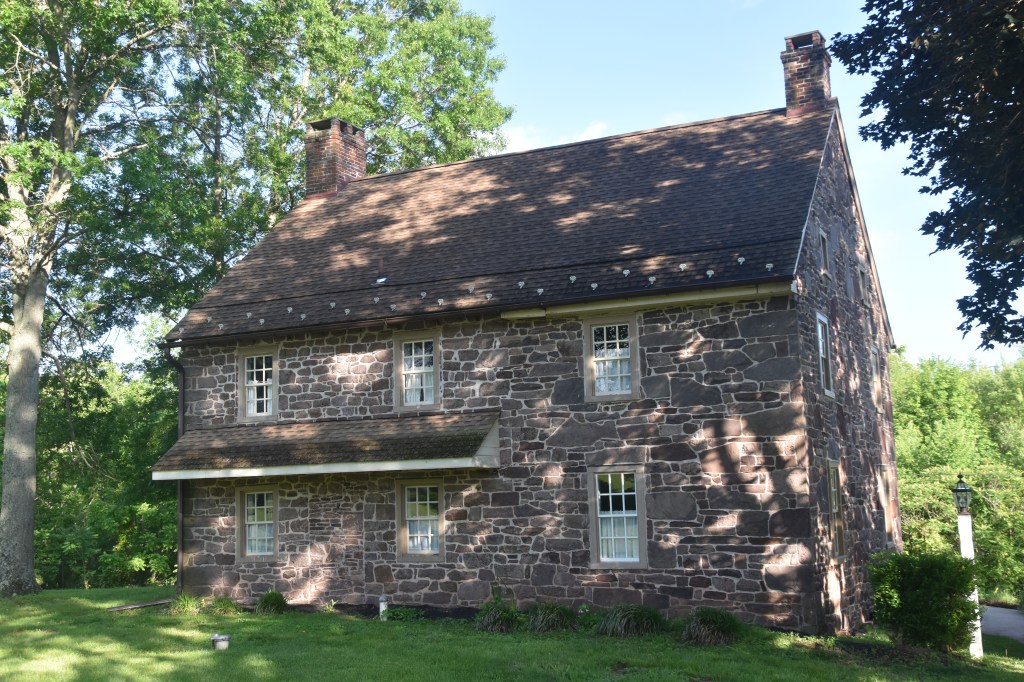
The DeHaven house, also known as the Indenhofen Farmstead, owned by the Skippack Historical Society and the intersection of Skippack Pike and Forty Foot Road. The 2nd stop of the evacuation of the wounded Gen. Nash.
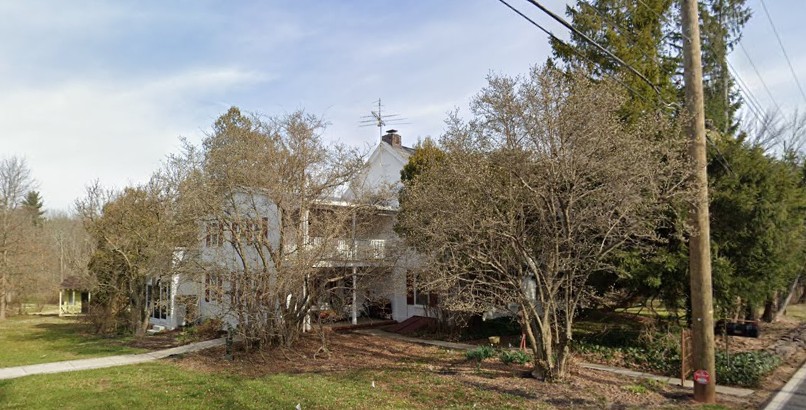
The Adam Gotwals house on Forty Foot Road, the last and final location where General Nash succumbed to his wounds. Photo from Google Maps.
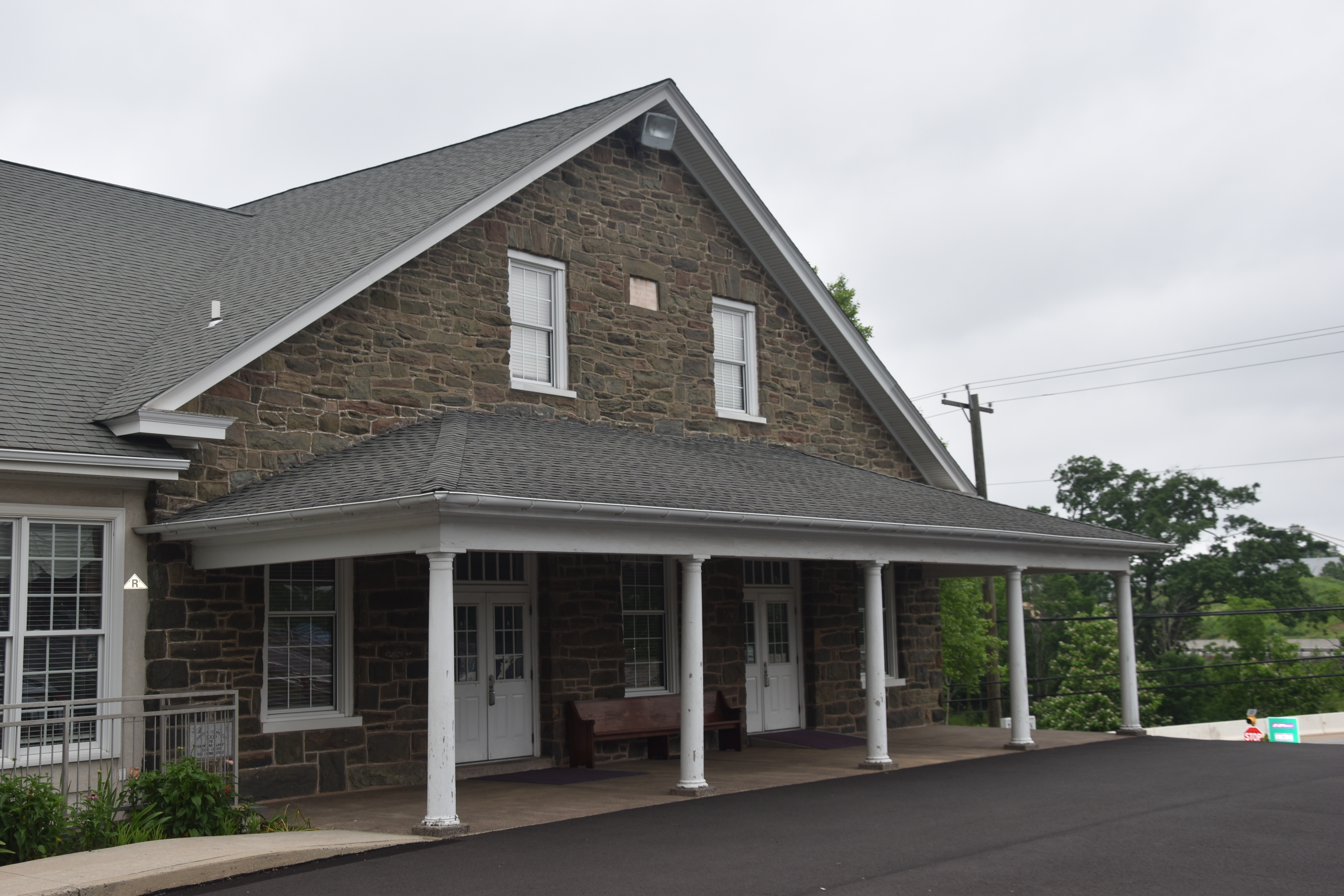
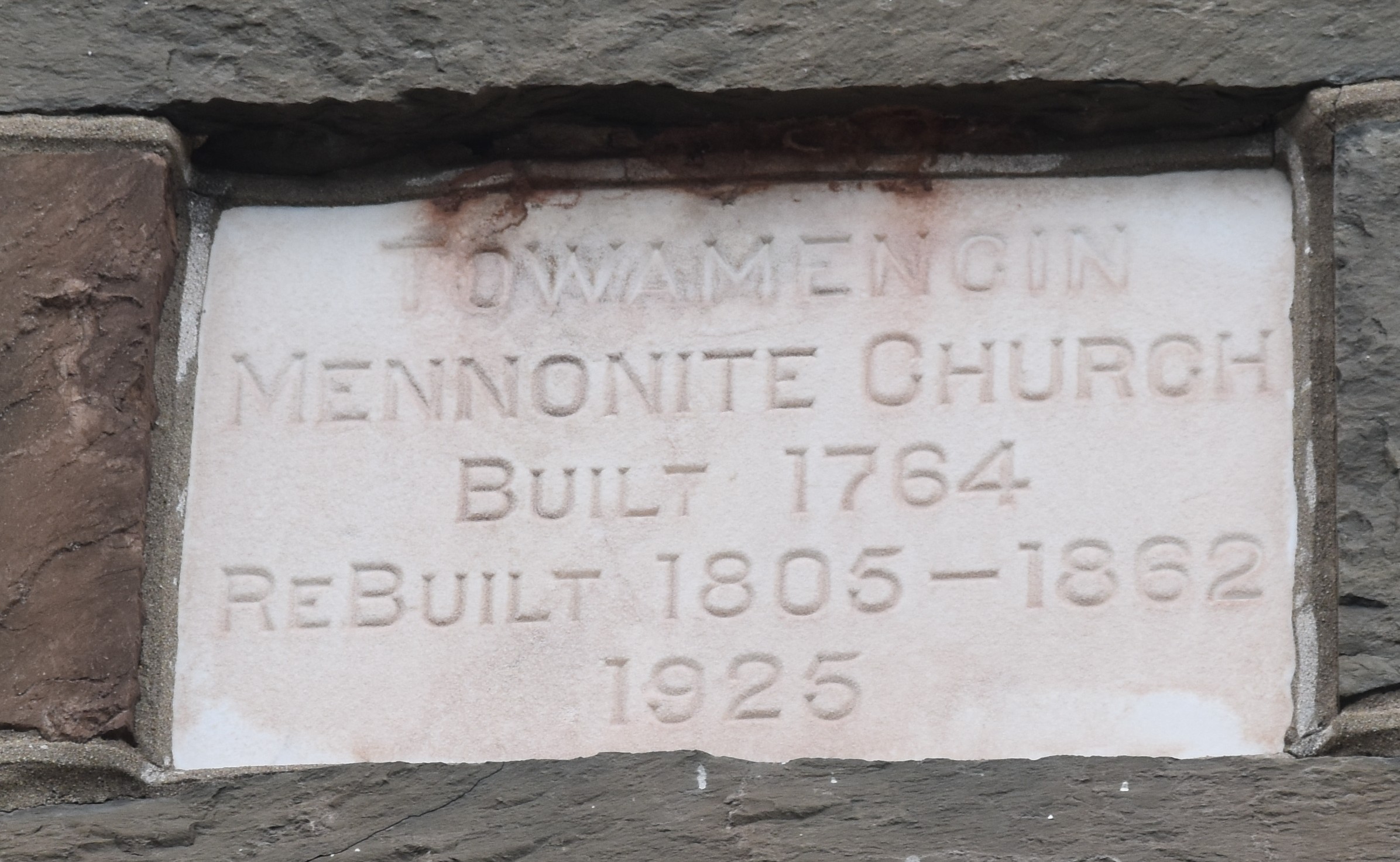
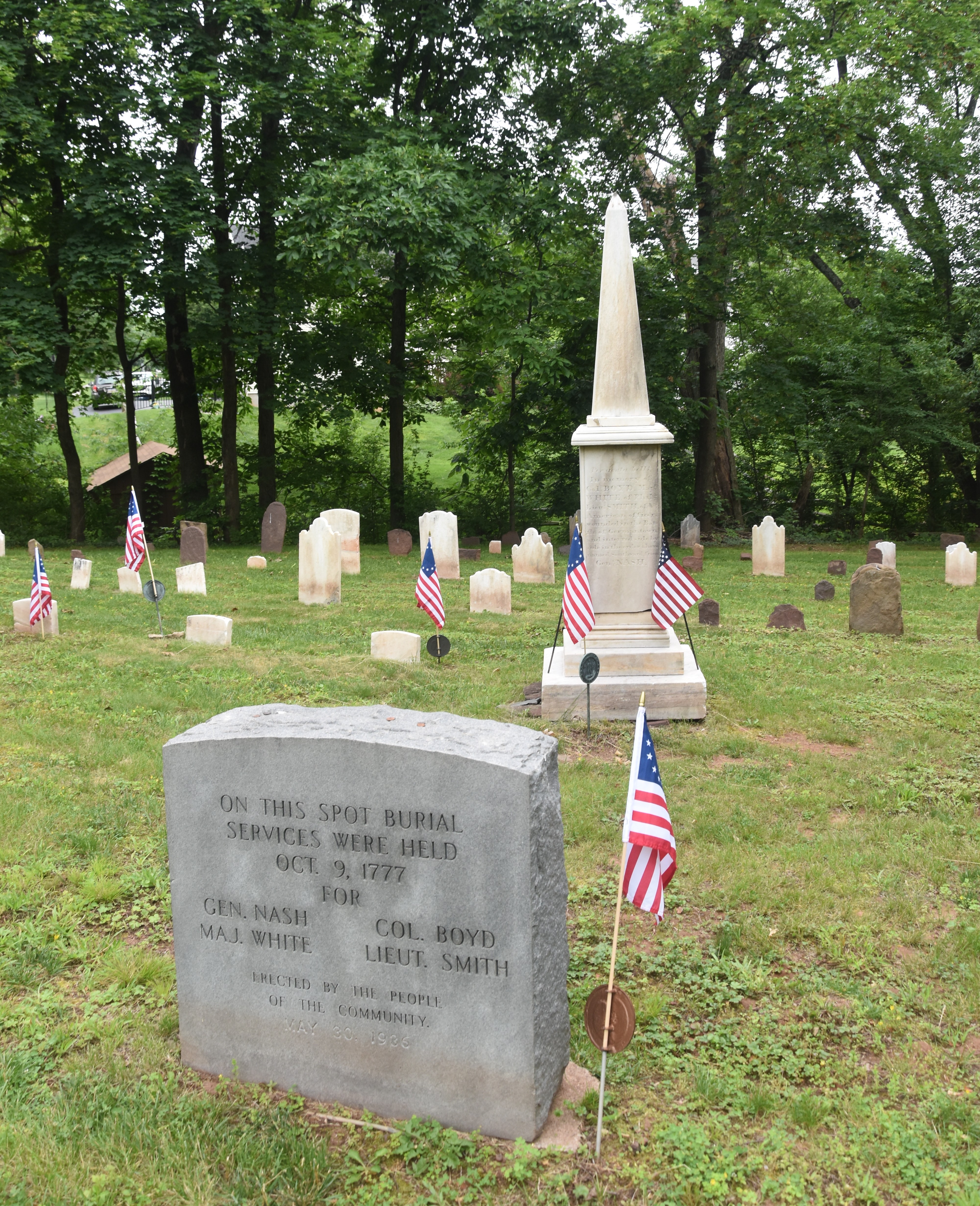
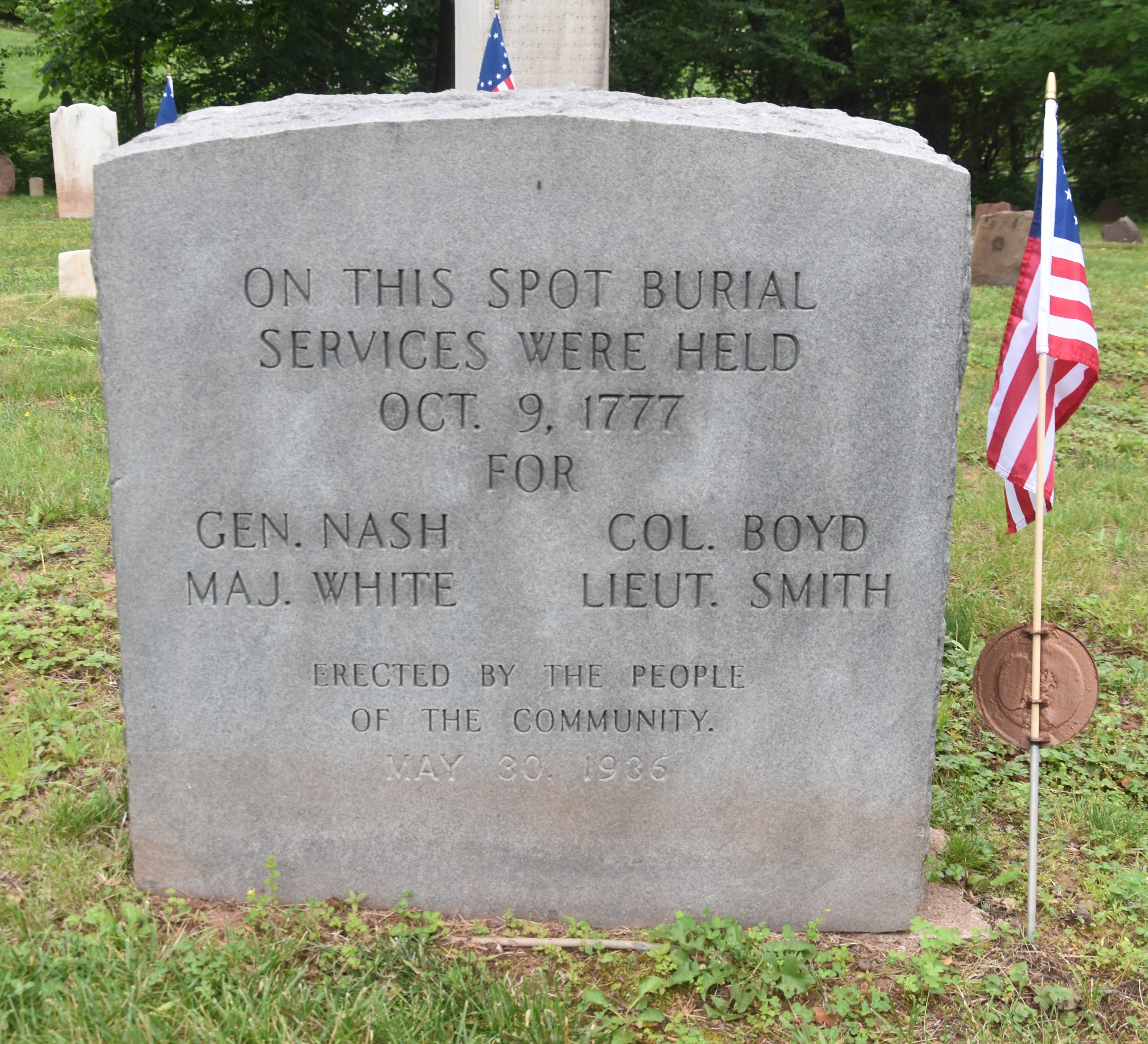
Besides Nash, several other soldiers were cared for at the Gotwals’ house and eventually died, including Major John White, who was shot attempting to set fire to Cliveden to force the British infantry that was holed up defending the stone mansion. General Nash died there and was buried at the Godshalk Burial Ground, also the location of the Towamencin Mennonite Church, further up Forty Foot Road at Sumneytown Pike.
Washington’s general orders issued on October 9th included: “Brigadier General Nash will be interred, at ten o’clock this forenoon, with military honours, at the place where the road the troops marched in, yesterday comes into the great road.” And Muhlenberg’s orderly book ordered: “All Officers whose Circumstances will admit of it, will attend and pay this respect to a brave Man who died in defence of his Country”
George Washington Parke Custis, in his Washington’s memoirs, wrote the following:
“On Thursday, the ninth of October, the whole American army was paraded by order of the commander-in-chief, to perform the funeral obsequies of General Nash, and never did the warrior’s last tribute peal the requiem of a braver solder or nobler patriot than that of the illustrious son of North Carolina.
Taking rank with the chiefs who had fallen in the high and holy cause of a Nation’s Independence, the name of Nash will be associated with the martyr names of Warren, Montgomery, Wooster and Mercer, while the epitaph to be graven on his monumental marble should be the memorable words of the patriot and hero on the field of his fame: From the very first dawn of the Revolution, I have ever been on the side of liberty and my country.”
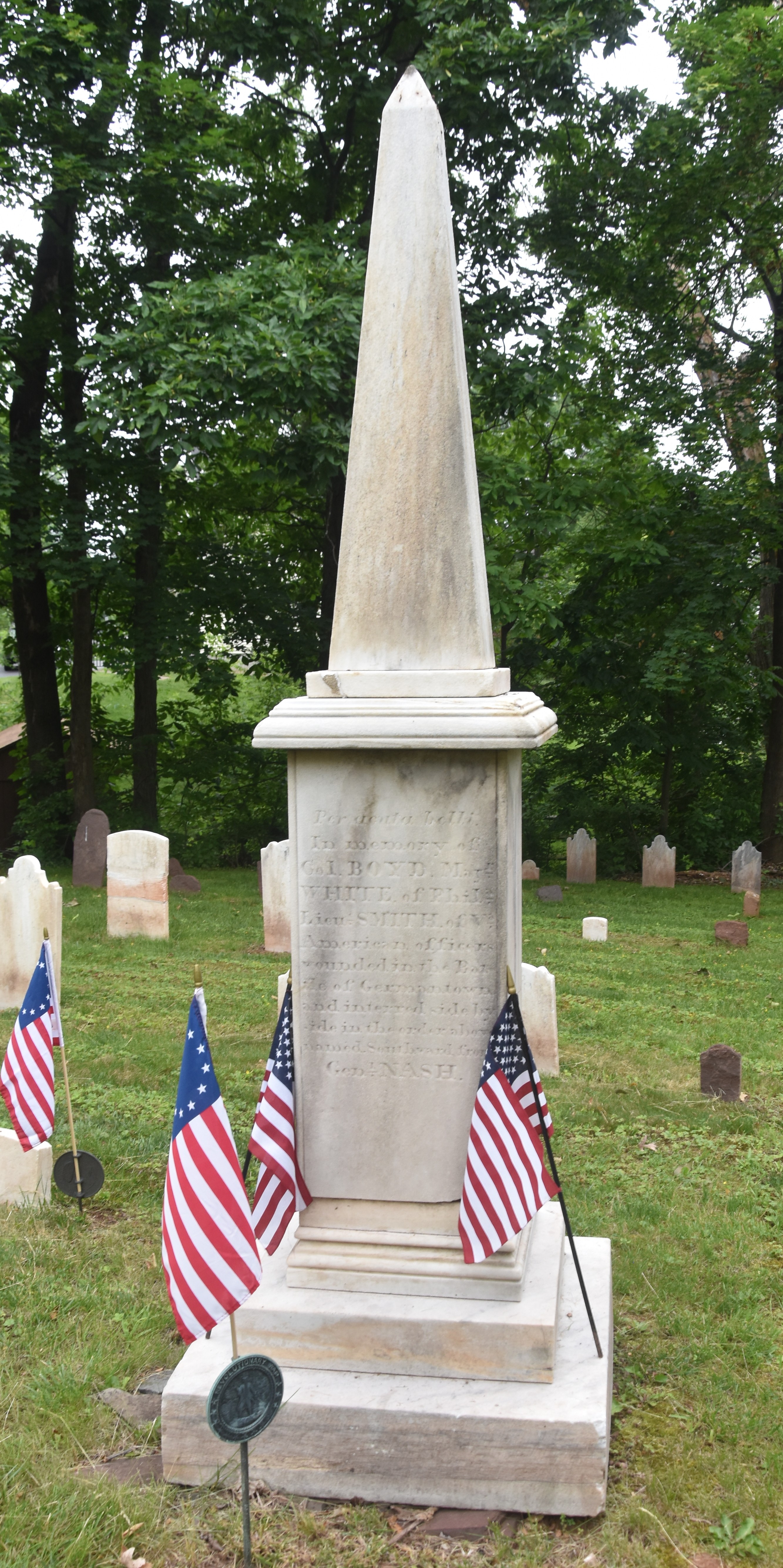
In 1844, a monument to General Nash and three other officers who also died from wounds received at Germantown, Major John White, aid to General John Sullivan, Colonel James Boyd, and Lieutenant William Smith, of the 11th Virginia Infantry Regiment. Lt. Smith, in an attempt to get the British soldiers in the Chew House to surrender, volunteered to carry a flag of truce and offer terms. He was immediately shot from the house by the British soldiers during the failed attempt.


For further reading:
Harris, M. C. (2019). Germantown, A Military History of the Battle for Philadelphia October 4 1777. Savas Beatie LLC.
Hagey, B. (n.d.). The Continental Army at “Headquarters Towamensing” October 8-16, 1777. https://www.towamencin.org/media/3712/headquarters-towamensing-october-8-16-1777.pdf
Williams, Samuel C. “Generals Francis Nash and William Lee Davidson.” Tennessee Historical Quarterly, vol. 1, no. 3, 1942, pp. 250–68. JSTOR, http://www.jstor.org/stable/42620753
Park Custis, G. W., Custis Lee, M., & Lossing, B. J. (1861). Recollections and private memoirs of Washington by Custis, George Washington Parke, 1781-1857. J.W. Bradley, Philadelphia. https://archive.org/details/recollectionsan01lossgoog/mode/2up
(n.d.). Indenhofen Farm. Skippack Township Historical Society. https://www.skippack.org/indenhofen-farm/
 Solutions To History